
Search results no longer exist only to send users to websites. Increasingly, they exist to resolve questions directly inside the results page itself. That shift changes what visibility means, how users interact with information, and why content that once performed well no longer behaves the same way.
AI Overviews are the clearest example of this shift because instead of presenting a list of links and expecting users to assemble an answer themselves, Google now summarizes information across multiple sources and presents a synthesized response at the top of the page. This change did not appear suddenly. It is the continuation of a longer transition in how search works, and understanding why AI Overviews appear requires understanding both how people search and how modern search systems interpret that behavior.
What AI Overviews Actually Are
AI Overviews are generated summaries that appear at the top of some Google search results and combine information from multiple sources to provide a concise answer without requiring users to visit individual pages first.
Unlike featured snippets, which extract content from a single source, AI Overviews synthesize information across the web, meaning their goal is not to rank a page but to resolve a question as efficiently as possible. This distinction matters because AI Overviews are not a new ranking position. They are a new response format.
Example:
Keyword: Is it better to lease or finance
AI Overview:

Featured Snippet:
Keyword: Is it better to lease or buy

Opinion, based on what I’m seeing: Featured snippets represented an early step toward answer-first search, where Google extracted a single clear answer from a webpage and surfaced it directly in results.
As search systems have evolved, many of the situations where featured snippets once appeared are now handled by AI Overviews and other discovery-focused SERP features that synthesize information across multiple sources instead of quoting one page. The underlying goal has not changed. Google is increasingly prioritizing resolving intent inside the search experience itself, which shifts visibility away from individual extracted answers toward summarized responses, contextual panels, and expanded discovery elements that reduce the need for users to visit multiple sites before understanding a topic.
Prediction: AI Overviews look like the next step between traditional Google search and fully AI-driven search
Instead of moving from search results to websites, users increasingly get answers directly in Google first.
The search results page becomes the place where learning starts, not just where navigation begins. Over time, this can shift expectations around search itself. People begin to expect answers immediately, and only visit websites when they want more depth, context, or a next step.
That moves search behavior closer to how people already use AI platforms like Gemini, Claude, ChatGPT, and Perplexity, where the interaction starts with an answer instead of a list of destinations.
This shift has led to a wave of uneducated commentary claiming that “SEO is dying”. What is actually disappearing is a version of SEO built around repetition instead of usefulness. SEO is evolving quickly, and has more opportunities today than at any time in the past. Let’s talk about it.
SEO Is Not Dying. It Is Evolving Into Something Even More Valuable
As I just mentioned, there is a growing narrative among a growing group claiming that AI Overviews and AI search mean SEO is dying. The reality looks closer to the opposite. What is disappearing is a version of SEO that relied on surface-level optimization, content volume, or repeating information that already exists everywhere else. When search engines begin answering simple questions directly, content that only exists to restate obvious answers naturally loses value. That does not eliminate SEO. It raises the standard for it.
This shift creates a larger opportunity for sites that understand how search is evolving. When basic explanations are summarized inside search results, the remaining value moves toward content that is genuinely helpful, solves real problems, and helps users move forward instead of stopping at understanding. SEO becomes less about capturing attention at the top of the funnel and more about being useful once attention exists.
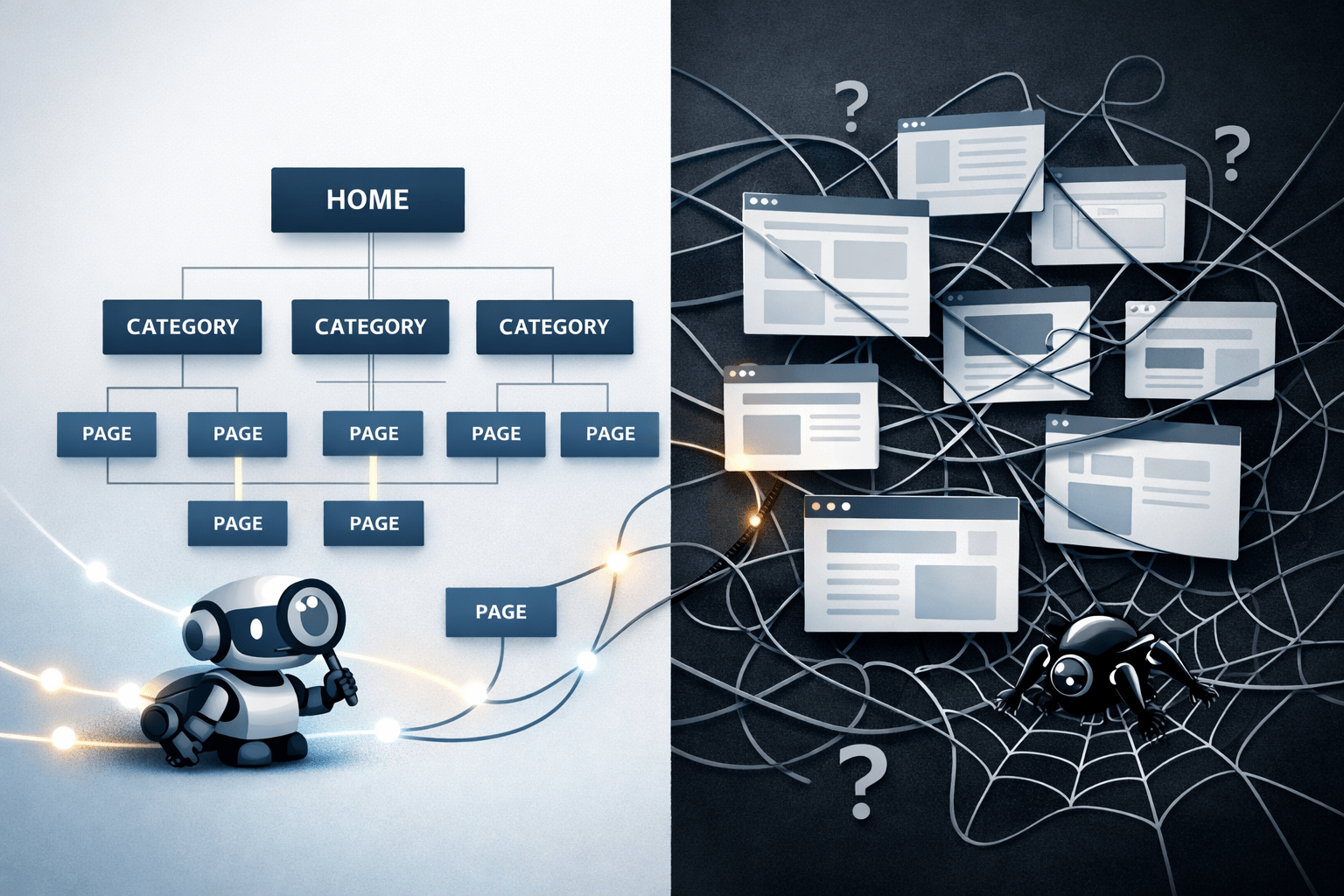
Structure becomes more important as well. Modern search systems need to understand not just what a page says, but how information connects, how intent progresses (and misaligned content dies), and where a user goes next. Content that is clearly organized, aligned to real search behavior, and built around solving problems instead of targeting isolated keywords becomes easier for both users and systems to trust.
In that sense, SEO is not dying. It is maturing. The advantage shifts toward people who can explain clearly, structure information logically, and create content that remains valuable even after a summary has already answered the first question.
Are you taking advantage of it?
Why Google Shows AI Overviews
AI Overviews appear when Google believes a query requires explanation rather than navigation.
This typically happens when the question is informational or exploratory, when multiple perspectives or sources are needed, when users are likely to refine their searches after learning something new, or when intent centers on understanding rather than immediate action. From a system perspective, this reduces friction. From a user perspective, it shortens the learning phase. Modern search systems increasingly optimize for satisfaction instead of clicks, and if a system can resolve uncertainty directly, it often will. This aligns with a broader pattern where search engines increasingly model behavior instead of matching keywords alone.
What Types of Searches Trigger AI Overviews
AI Overviews appear most often for queries where users are trying to understand something rather than do something immediately.
Common patterns include definitions and explanations, complex or multi-part questions, comparisons, or early-stage research queries. These are the same moments where users historically clicked multiple results, compared answers, and refined queries repeatedly. AI Overviews compress that process into a single interaction, which is why informational content is affected most strongly. When understanding is resolved inside search, fewer clicks are required to continue learning.
Examples of searches that are AI Overview heavy:
- Definitions and basic explanations (almost exclusively now)
- Comparisons between options or concepts
- Early-stage research queries
- Complex or multi-part questions
- Problem understanding searches
- Basic informational learning-focused queries
How AI Overviews Change Click Behavior
One of the most common observations since AI Overviews expanded is that impressions can increase while clicks remain flat or decline.
This is not necessarily a loss of visibility but a change in how visibility functions. Users may read a summary first, refine their query afterward, click later in the research process, or resolve their initial question without leaving the search. In other words, visibility and visits no longer move together as predictably as they once did. This mirrors a broader issue seen in informational content where content answers early-stage questions without guiding users toward the next step, causing engagement to stop at understanding rather than progressing toward decisions.
Important note here: One of the most important changes underneath this shift is that authority and branding begin to matter more, not less. When users are exposed to answers directly inside search results, they often encounter multiple sources before ever clicking a link. The first interaction becomes awareness rather than a visit. Users may see a brand referenced in an AI Overview, recognize it later during a refined search, and only click once they are closer to making a decision. In this environment, visibility builds familiarity before it produces traffic. Sites that consistently provide clear, trustworthy, and helpful information benefit because recognition carries forward into later searches. Authority is no longer built only through clicks. It is built through repeated exposure, consistency, and being associated with reliable explanations across the research process. As a result, branding and topical authority become tightly connected. The sites that are remembered are often the ones that get chosen for AI Overviews when understanding turns into a final decision.
Why Rankings and Traffic No Longer Move Together
Traditional SEO assumed a simple relationship where higher rankings produced more clicks and more traffic. AI Overviews weaken that relationship because when answers appear directly in search, ranking improvements may increase exposure without increasing visits.
The system has already satisfied part of the intent before the click happens. This is why intent alignment matters more than ever. Content that only explains increasingly competes with summarized answers, while content that helps users move forward in their decision process remains valuable. This is also why informational content frequently fails to move users toward decisions. The problem is not visibility. The problem is missing transitions between understanding and action.
What This Means for Content and SEO Strategy
AI Overviews do not eliminate the need for content. They change what content needs to do.
Content that survives this shift tends to move beyond basic explanations, anticipate the next question in the journey, connect informational understanding to decision-making, and provide depth or perspective that summaries cannot replace.
This is where content strategy and search behavior intersect.
When intent transitions are clear, content remains valuable even when summaries exist above it.
Make sure you’re matching your content to one of the four main categories:
4 Types of Search Intent
Every search falls into one category. Match your page to user intent or lose the click.
The goal is no longer to be the first answer. The goal is to be the next step.
Example:
Someone searches “what is forklift capacity.”
An AI Overview can explain the definition right away, so a page that only repeats that definition adds little value. A stronger piece of content goes further. It explains how forklift capacity affects real decisions, common mistakes people make, and what to consider next.
I would form content that could:
- Explain how the concept applies in real situations instead of repeating the definition
- How does forklift capacity affect real operating conditions? (not just define the term)
- Help users understand what to do next after learning the basics
- Help buyers understand what to evaluate next, such as load center, attachments, and application requirements
- Connect understanding to decisions, outcomes, or next steps in the journey
- Provide examples of choosing the right forklift for your business, how does each one amplify your need? and link specific inventory

The overview gives the basic understanding. The content helps the user move forward. That’s how you win.
Conclusion
AI Overviews are not the end of search or the end of SEO. They are a visible signal that search is changing from directing users toward information to helping users understand information immediately. The first answer increasingly happens inside the results page itself, which means content that only exists to repeat basic explanations becomes easier to replace.
What remains valuable is content that helps users move forward once understanding begins. When summaries answer the first question, the role of content shifts toward context, application, and decision-making. The opportunity is no longer in being the first answer. It is the next step.
Search is moving toward understanding first and decision second. Sites that adapt to that shift by focusing on clarity, usefulness, and structure will not lose visibility. They become more important, because they provide what summaries cannot: depth, perspective, and progression after the answer.
SEO is not disappearing. It is becoming more aligned with what it was always supposed to reward. Create content that genuinely helps people solve problems and move forward. That’s how you win.
Learn more about how search behavior shapes modern search systems via AI discovery and how understanding search psychology helps content move users from information to decisions.
Frequently Asked Questions About AI Overviews
What is an AI Overview in Google Search?
An AI Overview is a generated summary that appears at the top of some search results and combines information from multiple sources to answer informational or complex queries directly within Google.
Why does Google show AI Overviews?
AI Overviews appear when Google believes users want understanding rather than navigation, most commonly for informational or research-based searches where users typically compare multiple sources.
Do AI Overviews reduce website traffic?
They can reduce clicks for early-stage informational queries because some questions are resolved directly in search, but they can also increase visibility and shift clicks toward later stages of the decision process.
How are AI Overviews different from featured snippets?
Featured snippets extract content from a single webpage, while AI Overviews generate summaries using multiple sources and are designed to synthesize information rather than quote one page directly.
What types of searches trigger AI Overviews most often?
Informational, explanatory, and multi-part questions are most likely to trigger AI Overviews, especially when users are trying to understand a topic rather than complete an action.
Can websites still benefit from AI Overviews?
Yes. Pages that provide clear explanations, strong context, and logical next steps are more likely to be referenced or visited after users move beyond initial understanding.
How should content change because of AI Overviews?
Content should focus less on repeating basic explanations and more on guiding users forward, because content that helps users move from understanding to decision remains valuable even when summaries appear in search.












Join the conversation!