
Search results no longer exist only to send users to websites. Increasingly, they exist to resolve understanding directly inside the results page itself. AI Overviews, summaries, comparisons, and expanded SERP features now answer early questions before a visit ever happens. That shift changes what content needs to do to remain valuable.
For years, content succeeded by being the clearest explanation available. Today, explanation alone is often resolved before the click. The role of content has moved forward in the journey.
Instead of being the first answer, effective content now becomes the next step.
Why Answer First Search Changes Content Strategy
Answer first search changes the moment when users need a website. Early uncertainty is often resolved directly in search results, which means informational content that only defines or explains concepts increasingly competes with summarized answers.
This does not remove the need for content. It changes its purpose. Content now succeeds when it helps users move from understanding toward application, evaluation, or decision. The value shifts from explaining what something is to helping users understand what to do next.
This is why some pages gain visibility without gaining proportional traffic. The system recognizes relevance and surfaces the content, but users only click once their questions become more specific.
How Modern Search Systems Interpret Content Structure
Modern search systems do not evaluate content only by keywords or topical coverage. They evaluate whether information resolves intent and how clearly information progresses from one idea to the next.
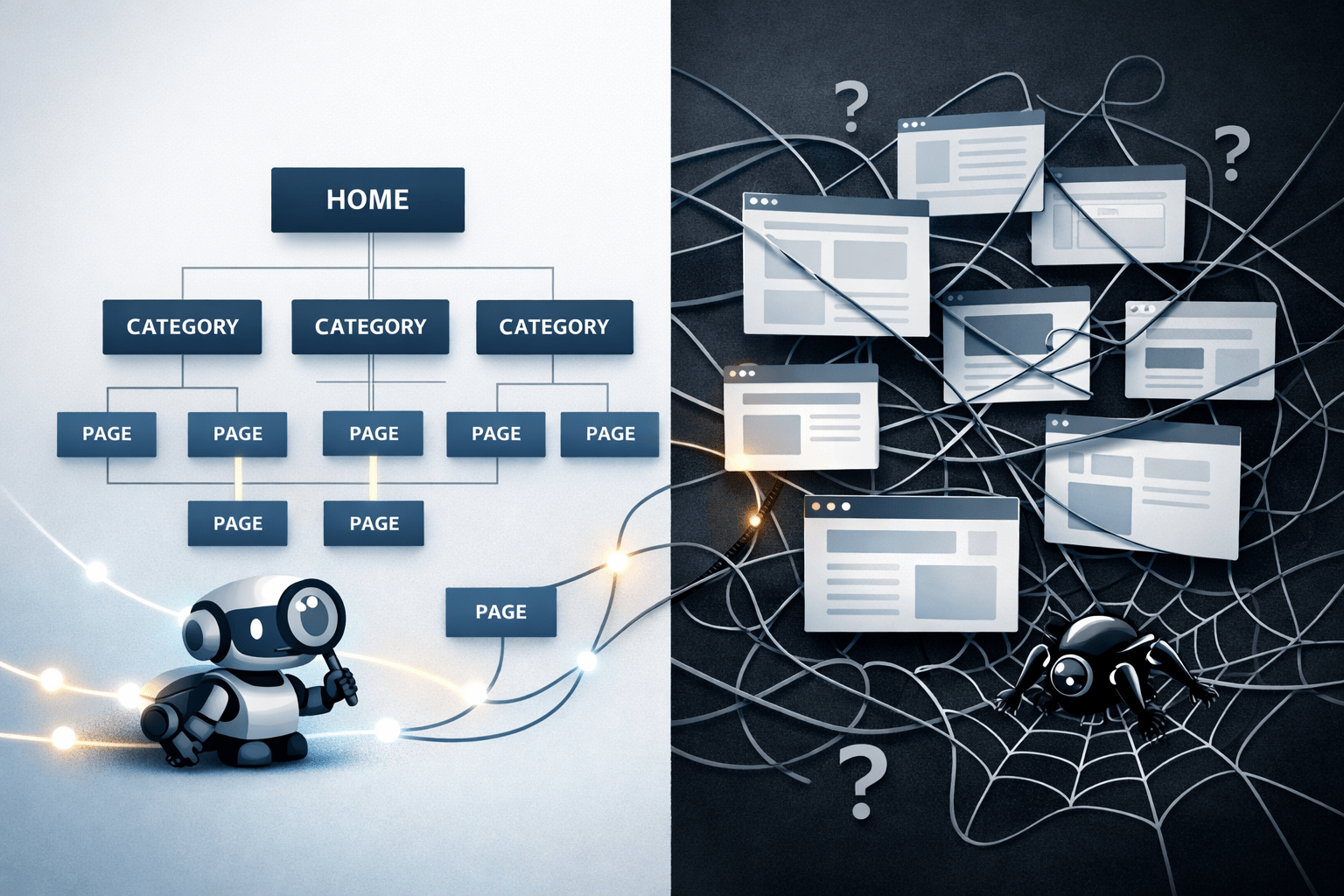
Content that is structured logically becomes easier to interpret. Sections that anticipate follow-up questions signal depth and usefulness. Pages that move naturally from explanation into application provide clearer signals than pages that stop once a definition is complete.
Structure becomes part of meaning. When information is organized around how people actually learn and decide, both users and systems understand where the content fits within the broader journey.
Why Definition First Content Loses Clicks
Definition first content worked when search results primarily acted as navigation. Users searched, clicked, and learned on the page itself. That relationship weakens when search engines provide definitions directly inside results. Make sure you understand each type of page to aviod search misalignment here:
4 Types of Search Intent
Every search falls into one category. Match your page to user intent or lose the click.
A page that only repeats a basic explanation now adds limited value. The system can summarize that information faster than a user can open a new page. As a result, visibility may increase while engagement remains flat.
The issue is not ranking or exposure.
The issue is that the content stops at understanding instead of progressing toward action or decision.
The Shift From Explanation to Progression
Content that performs well in answer-first environments tends to follow a different pattern. It assumes users may already understand the basics by the time they arrive.
Instead of repeating introductory information, stronger content answers the next question. It explains how concepts apply in real situations, what variables change outcomes, what mistakes to avoid, and how decisions are influenced by context.
Understanding becomes the starting point, not the destination. It’s a JOURNEY.

How to Structure Content Around Intent Transitions
Intent rarely stops at a single question. Users move from learning to comparing, from comparing to evaluating, and eventually toward deciding. Content structure should reflect that movement.
A strong structure establishes shared understanding, introduces real-world implications, explains tradeoffs or variables, and then helps the user understand what comes next.
When these transitions are clear, content remains valuable even when summaries exist above it. Users arrive not to learn the definition, but to apply what they already learned.
Example: Someone searches “enterprise SEO vs local SEO.” An AI Overview or summary can explain the difference immediately, so the user already understands the basic definition before clicking anything.
A page structured around intent transitions does not stop at explaining the difference. It moves forward. It explains when each approach breaks down, how business structure changes the strategy, what tradeoffs exist in budget or timeline, and how a company should decide where to invest first. The definition creates understanding. The structure that follows helps the user move from understanding to evaluation, and eventually toward a decision.
What Content Looks Like When It Becomes the Next Step
Consider a search like “how often should a website be redesigned.” An AI overview can explain that most sites are refreshed every few years. That answers the surface-level question and sets a general expectation.
The content that earns engagement goes further. It explains how redesign timing depends on traffic patterns, technical debt, changing search behavior, and whether performance issues come from design or structure. It helps readers understand when a redesign solves a problem and when it simply hides one. The overview delivers the summary. The content delivers judgment.
This is where engagement now shifts. Users click when they need interpretation and decision-making context, not when they only need a definition.
How Internal Linking Supports Intent Progression
Internal linking becomes more important as the first search expands. When users arrive after gaining initial understanding, they often need to move deeper into related questions rather than restart their research.
Linking between articles that represent different stages of intent helps maintain progression. A reader moving from search behavior to content structure to decision-making signals usefulness and topical authority. Structure across pages reinforces structure within pages.
What This Means for Content Strategy Going Forward
AI Overviews and answer first interfaces do not eliminate content. They raise the standard for it. Content that only explains increasingly competes with summarized answers. Content that helps users move forward becomes more valuable.
The goal is no longer to be the first answer a user sees. The goal is to remain useful after the first answer has already been given.
When content anticipates the next step, aligns with real search behavior, and connects understanding to decisions, visibility turns into engagement instead of stopping at awareness.
Conclusion
Answer first search changes when users need content, not whether they need it. Understanding increasingly begins inside the results page, which means content must provide something beyond explanation to remain valuable.
The sites that succeed in this environment are not the ones that repeat information more efficiently. They are the ones helping users move forward once understanding exists. Structure, clarity, and progression become the differentiators.
Search is shifting toward understanding first and decision second. Content that supports that transition continues to earn attention because it provides what summaries cannot. Depth, context, and direction after the answer.
Compare the differences between informational and transactional pages side-by-side to get into AI discovery












Join the conversation!