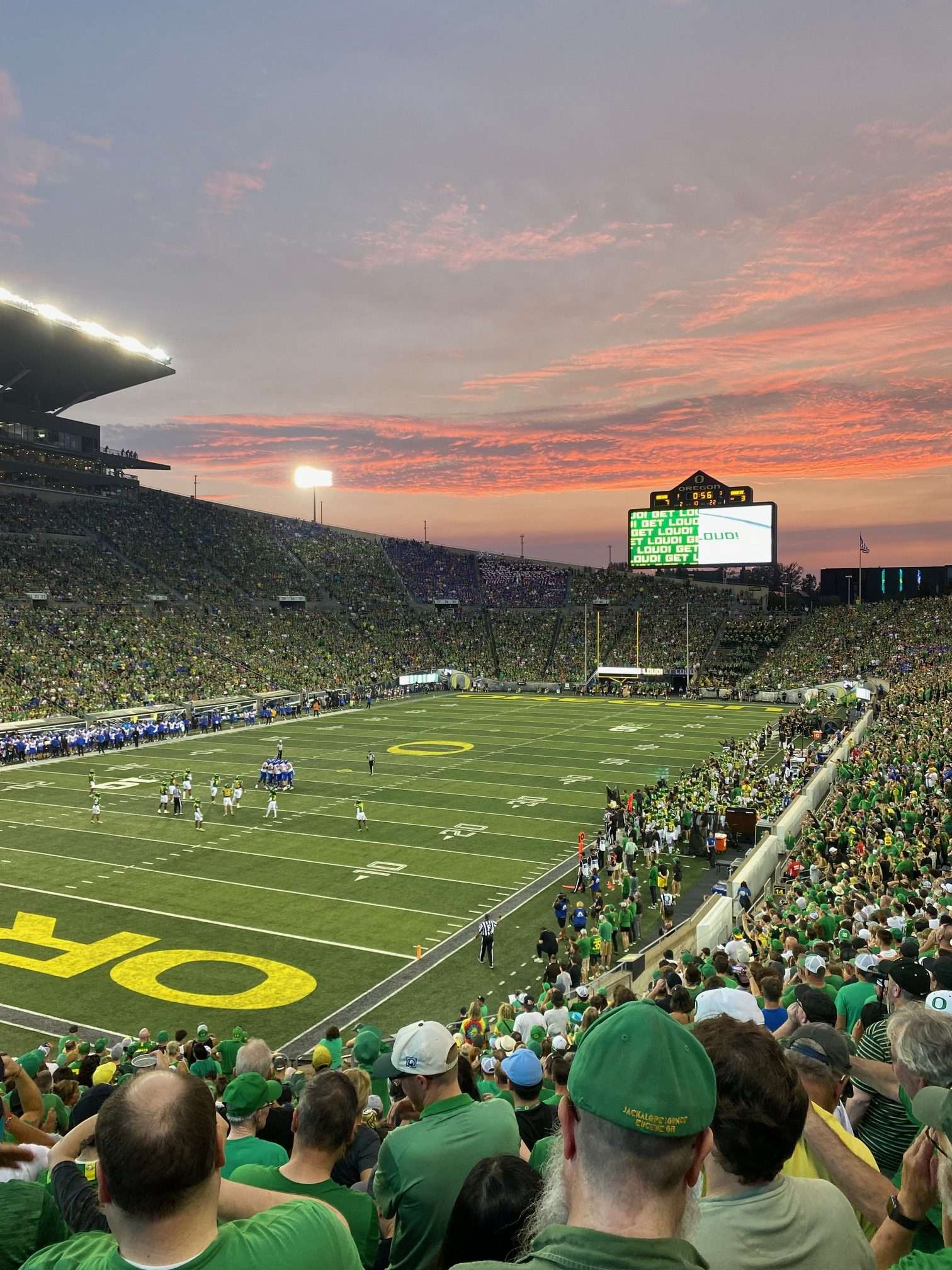
I need to get something out of the way. SURPRISE: I am way too emotional about Oregon Ducks football. This has been true for my entire life. It will not be changing. So I might as well share that passion with anyone else who cares, right???? So i made this:
The history. The data. The heartbreak. The glory. 109 pages covering every season, rivalry, championship, and player that matters.
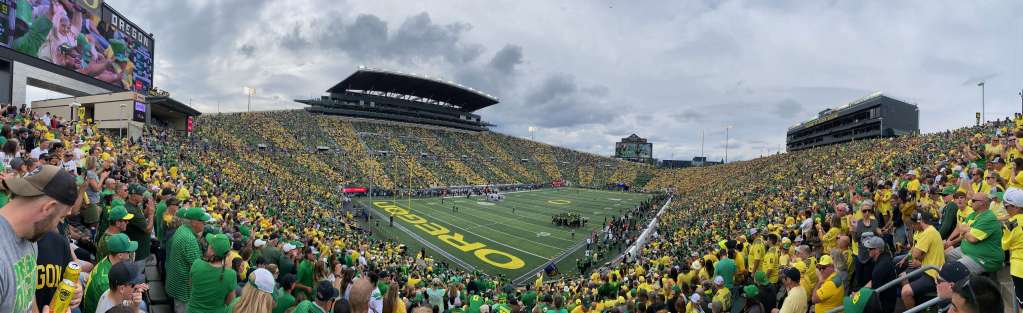
I was going to Autzen Stadium before I could walk. My parents took me as a baby. I don’t remember it, obviously, but there are pictures, I need to get those and share them ASAP. This was the late 90s. Oregon was not ultra cool yet. We weren’t on national TV every week. We weren’t in the playoff conversation. We were just a program in the Willamette Valley on the cusp of real national success.
I grew up on it. Saturday afternoons in the fall were non-negotiable. The entire weekend is focused on the game. Pregaming for the full day. Watching ESPN until midnight just to MAYBE see a clip of the game I just watched live. College gameday every chance we got. Constant drives from Portland.
SO. MANY. MEMORIES. USC 2009 Halloween night. Stanford comeback. Being in AZ to watch Cam and Auburn beat us in the Natty. List goes on and on.
Then college happened.
The Mariota years wrecked me
I went to college during the Marcus Mariota era. You need to understand what that was like.
You’re 19, 20 years old. You’re watching a quarterback who is the best player in college football, and he plays for your team. 42 touchdowns and 4 interceptions in a single season. A 90.92% Heisman vote share. You watch him throw for 338 yards and 2 touchdowns in the CFP semifinal and demolish Florida State 59-20, and you think, this is it. We’re going to win the whole thing. This is the year.
And then Ezekiel Elliott runs for 246 yards and 4 touchdowns in the national championship and there is nothing anyone can do about it. Ohio State 42, Oregon 20. A third-string quarterback nobody had heard of six weeks earlier. Nine future NFL draft picks on their roster. The best Oregon team ever built, and it wasn’t enough.
That’s the night I realized this was never going to be casual for me. You don’t watch something like that at 20 years old and come out the other side a normal, well-adjusted sports fan. You come out a person who checks spring practice reports in March like they contain classified intelligence. You come out a person who has opinions about defensive line rotation depth. You come out a person who builds entire websites about it.
It kept happening
After the Mariota years, I figured, okay, that was the peak, we had our shot, life goes on. Instead it kept getting worse. Or better. Depending on how you define those words.
Herbert showed up and was impossibly good and we went to the Rose Bowl and beat Wisconsin in a comeback and he was crying on the sideline and Cristobal was crying on the sideline and I was probably crying in my living room. Then Lanning came and went 48-8 in four years and won the Big Ten in year one and beat Ohio State 32-31 at Autzen in the biggest regular season game in program history. 60,129 people. Record crowd. Fun one, boy those tickets were expensive but worth.
And then we lost to the same Ohio State team 41-21 in the Rose Bowl two months later. Same opponent. Same players. Different result.
And then the Peach Bowl. Pick-six on the opening play. 7-0 Indiana before I sat down. Then 14-0. Then 21-0. Then 28-0. Final: 56-22. The biggest stage we’d played on since 2014, and we came out like the game started at a different time than we expected.
We’ve been outscored 97-43 in our last two CFP elimination games. The gap between contender and champion keeps getting smaller. It has never closed.
That’s what being a Duck is. You know the glory is real because the pain is real. You can’t separate them. 2010 was glory 9, pain 10. 2014 was glory 10, pain 9. 2025 was glory 8, pain 8. You carry all of it.
So obviously I built a whole website
There’s no version of my life where I don’t eventually build a website about this.
I build websites. That’s my job. I think about how information should be organized so people can actually find what they’re looking for. I cannot turn this off. It runs in the background constantly. And when I looked around at the Oregon Ducks fan content landscape and saw that there was no single, organized place that told the full story of this program, the history, the data, the heartbreak, the glory, all of it, I knew I was going to be the one who made it.
The Quack Report is that site.
26 seasons covered. 8 rivalry records. Every BCS and CFP game with full narratives, opposing team rosters, and NFL draft outcomes so you can see exactly how stacked Ohio State was in 2014. Dan Lanning’s 48-8 record broken down by everything. Autzen game day guide, traditions, noise records, parking, food, where to sit. The 2026 schedule with game-by-game previews. A spring game page that’s already live for April 25. Dante Moore turning down $50M and the #2 pick to run it back. 47 active NFL Ducks. Recruiting history. A visitor’s guide for opposing fans coming to Eugene. A heartbreak and glory index that rates every season on two axes because that’s the only honest way to do it. A fan stories page because the memory of being at your first game at Autzen belongs somewhere permanent.
It started as “I’ll just make a schedule page.”
It is 109 pages now. It is not done.
What’s next
Spring game is April 25. Free admission. Autzen. 1 PM. Dante Moore is back as a Heisman favorite. The entire starting defensive line returned. Three straight top-five recruiting classes. November 7 at Ohio State. That one is going to matter.
If you remember the Dixon injury, if you were at the 2009 USC game, if you cried after the Peach Bowl, this site is for you. If you’ve ever argued about whether Mariota or Herbert was the better Duck, this site is for you. If you check spring practice reports in March like a normal person, this site is for you.
It never rains at Autzen Stadium.
This is our year? This is our year..














Join the conversation!