
SEO Blog · Modern Search
Your customers still ask the questions. AI increasingly reads the sources, weighs the options, and picks who gets recommended. Most content was never written for that reader, and this is the playbook for fixing it, with live data from a site of mine that’s winning.
The recommendation layer is where AI systems like ChatGPT, Gemini, and Google’s AI Mode decide which brands get into their answers. To win it, your content has to pass three tests: the model can reach it, verify it, and quote it. Being named in an answer is not the same as being cited as the source, and you need both.
I miss the old web. Ten results, six open tabs, the click a good page actually earned. I didn’t ask for a machine middleman, and some days I still resent it. But somewhere between the resentment and the client work, I noticed something: this era rewards exactly the things I got into SEO for. Real data, honest sourcing, structure that respects the reader. The tricks are dying and the craft is getting promoted. So no, I don’t love the landscape. I love what it demands.
Picture someone buying an espresso machine. Five years ago they typed “best espresso machine under $500,” opened six tabs, and argued with themselves for a week before deciding. Now they ask ChatGPT and get three machines ranked with reasons, because the model has already read the reviews, compared the specs, and made the call for them. In Orbit Media’s March 2026 survey of 1,110 US adults, more than half of respondents now start a search by opening an AI app.
Here’s the honest part most posts skip: that same survey found Google usage hasn’t declined, which means this is less a replacement story than an addition story. And the shift isn’t laziness. It’s what people have always done when choice gets overwhelming: they borrow judgment from something they trust, and the trusted something just stopped being human. A new decision-maker showed up between your customer and your website, and it never scrolls, never gets bored, and has never once been charmed by a hero image.
That new reader is the problem I spend my working weeks on. I build AI visibility systems for enterprise brands, and this post is the mental model behind the work I publish at haydenschuster.com: what the recommendation layer is, how it behaves differently on every surface, and the loop I use to win it. And instead of hypotheticals, I’m going to show you the receipts.
Meet the lab: The Crawler’s Cookbook, my for-fun fan site for the Dungeon Crawler Carl books, where I test everything before it goes near a client. Ahrefs scores the domain a 1 out of 100, which is authority-speak for “nobody.” And yet, in the 90 days ending July 16, 2026: 14,939 citations in Bing’s AI answers (8,336 in the last 30 days, so it’s accelerating), and Google impressions up from 119 a day in April to more than 10,000 a day in July. Every figure in these green boxes comes from raw exports pulled July 18, 2026, because a post about verifiability should be verifiable.
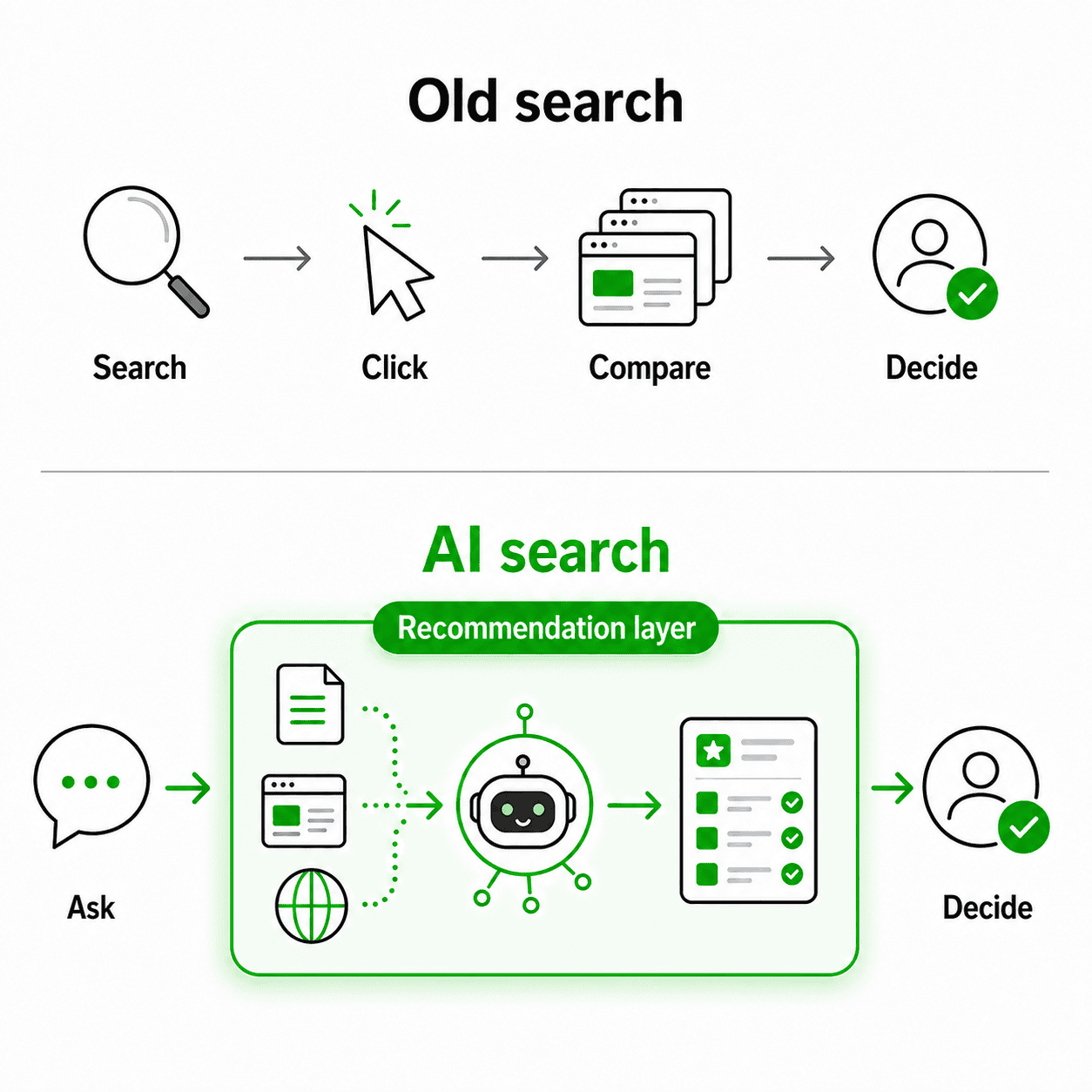
Who makes the decision now?
The searching didn’t change much. The deciding changed completely.
| Step | Classic search | AI search |
|---|---|---|
| Scans the options | You | The model |
| Compares them | You | The model |
| Judges trust | You | The model |
| Makes the call | You | The model |
| Checks out | You | Increasingly, the agent |
| Visits your site | Everyone | Almost no one |
Every row in that table used to be your customer’s job. Search Engine Land calls this territory the AI decision layer, where AI weighs trust, relevance, and authority before deciding who makes the shortlist, and losing here means the customer never learns you existed.
The checkout row is the newest and, for ecommerce, the biggest. Google’s Universal Commerce Protocol, launched in January 2026 with Shopify, Target, Walmart, and dozens of others, lets agents carry a shopper from discovery to purchase inside AI Mode and the Gemini app, and the Universal Cart now checks people out with Google Pay. Google even ships a Merchant Center report comparing your share of voice on AI surfaces against similar brands. When the answer becomes the store, being in the answer becomes distribution, and losing the recommendation layer stops costing you a click and starts costing you the sale.
What is the recommendation layer?
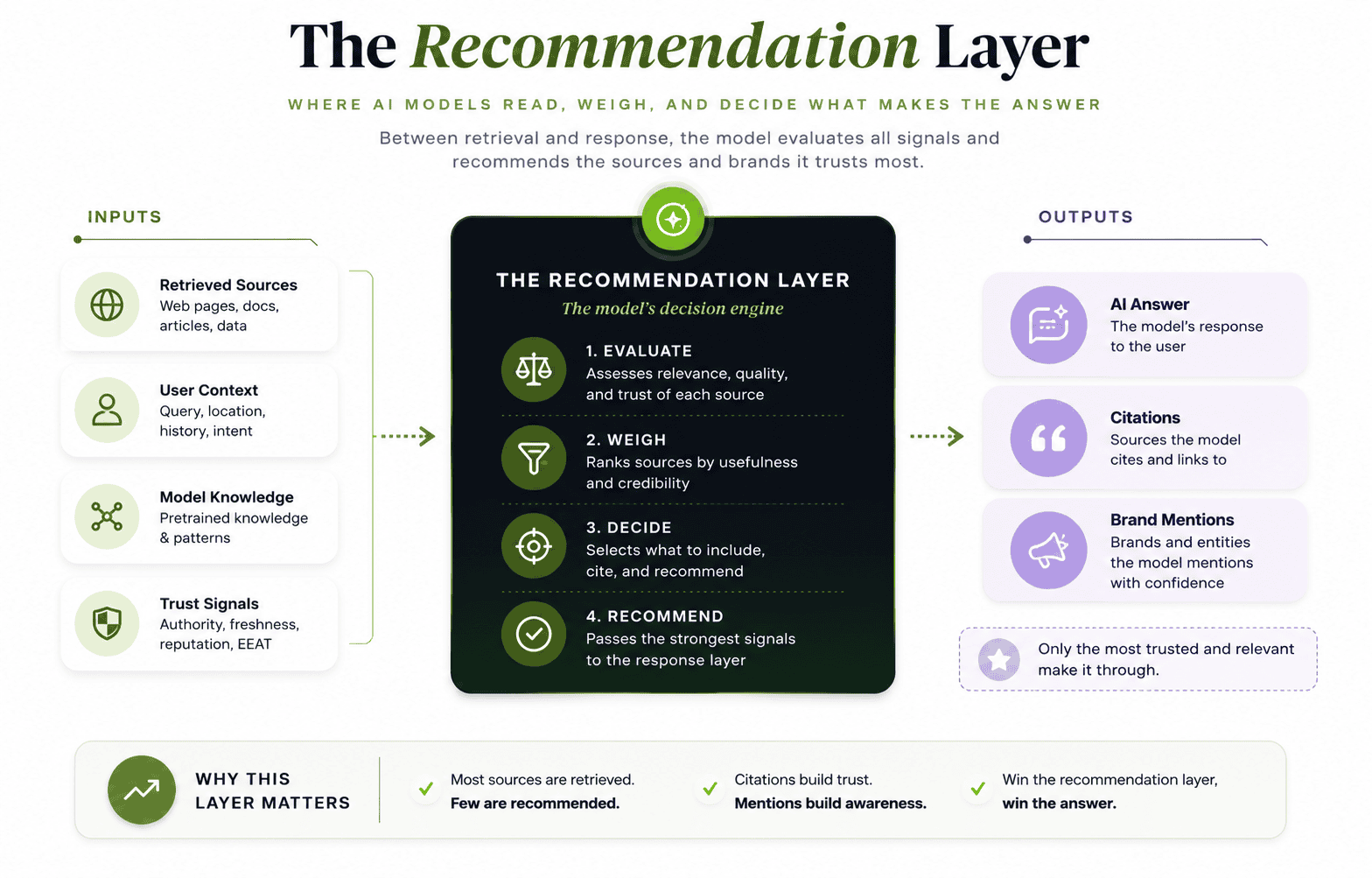
The recommendation layer is the space between a person’s question and the answer an AI gives them. It’s where ChatGPT, Gemini, Perplexity, Copilot, and Google’s AI Mode fetch sources, weigh them, and choose which brands and pages get into the answer. In classic search your job ended at ranking, but here ranking is only the audition, and getting chosen is the job.
If you think your rankings have this covered, they don’t. Ahrefs tested 15,000 prompts and found only 12 percent of links cited by ChatGPT, Gemini, and Copilot rank in Google’s top 10 for the same prompt, and around 80 percent don’t rank anywhere for that query at all. Your rank tracker is watching one store while the model shops in several.
One page proves the split. The fan site’s reading order guide sits around position 9 on Google and earned 8 clicks on 2,173 impressions over three months, which is close to invisible. In Bing’s AI answers, that same page holds a 65.1 percent citation share on the books-in-order question. Nearly nothing on one scoreboard, dominant on the other, and it’s the same page. Watch only rankings and you’d call it a failure.
One layer, five landscapes
“AI search” isn’t one thing. Each surface retrieves differently, trusts differently, and rewards different work, and treating them as one blob is how teams end up optimizing for none of them.
| Surface | What it is | Where it pulls from | How you win there |
|---|---|---|---|
| AI Overviews | Google’s summary pinned above the results on some queries. | Google’s own index. Ahrefs’ earlier studies found about 76 percent of its citations came from top 10 pages. | Keep ranking, and open every section with a liftable answer. Classic SEO still buys the ticket here. |
| AI Mode | Google’s conversational search tab. | Google’s index, but it fans your question into a batch of hidden sub-searches and assembles an answer from all of them. | Cover the sub-questions, not just the head query. This is where FAQs earn their keep. |
| Chatbots | Destination apps people ask directly: ChatGPT, Gemini, Claude. | Training memory plus live retrieval, and each one shops at a different store: ChatGPT grew up on Bing and now blends in its own crawler, Gemini is wired into Google, and Claude runs on Brave’s independent index. | Consistent brand facts everywhere, presence on third party sources they trust, and indexes beyond Google kept healthy, because a page invisible to Bing or Brave is invisible to the bot that shops there. |
| Copilot | Microsoft’s assistant inside Bing and Windows. | Bing’s index. | Feed Bing. Its Webmaster Tools now shows you the actual citation scoreboard. |
| Perplexity | The citation-first answer engine. | Largely its own crawler and index, with results that still lean toward pages that rank. About a third of its citations come from top 10 pages. | Your existing SEO strength transfers most directly here. |
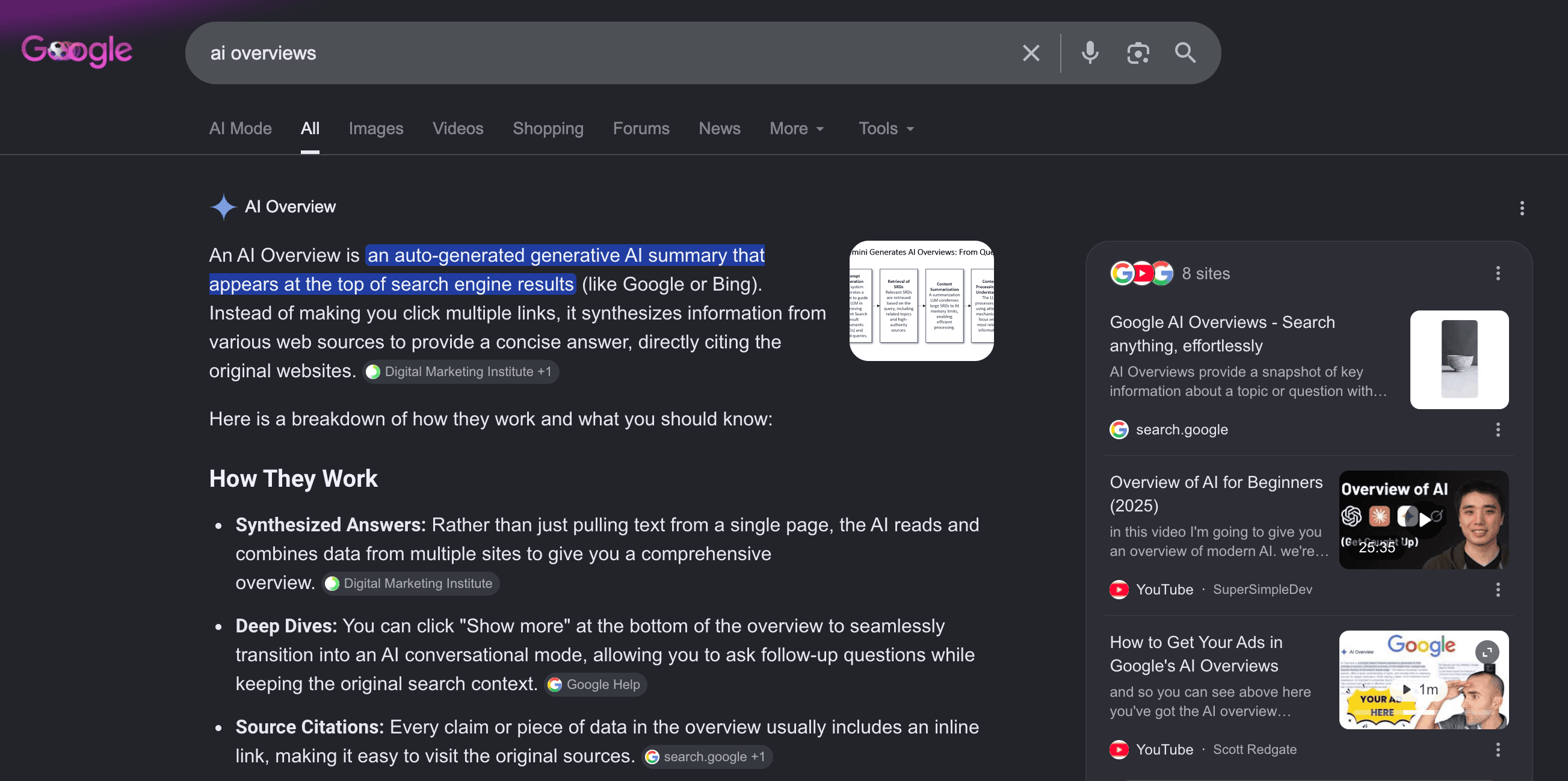
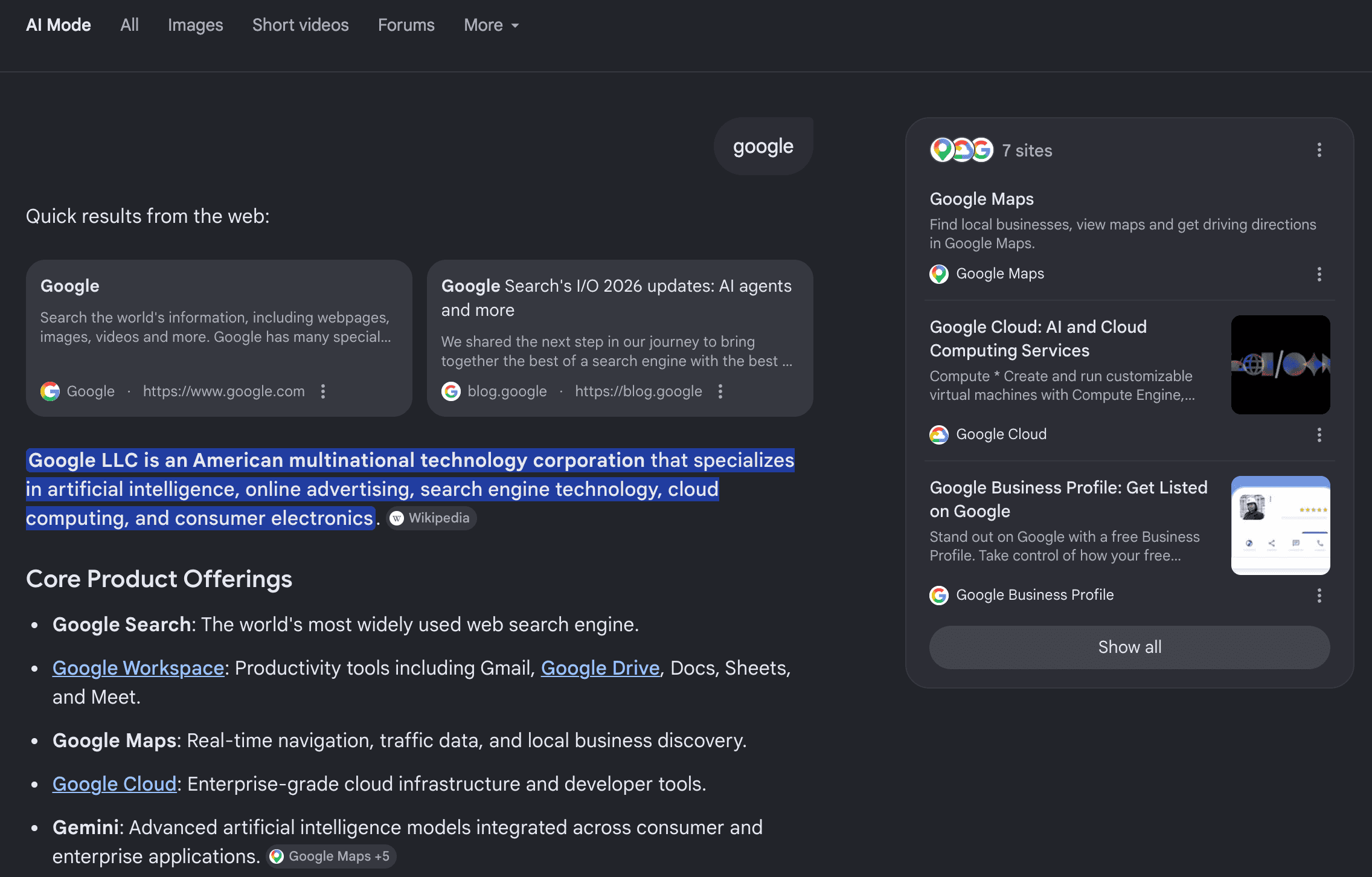



Both overlap figures in that table are Ahrefs data, and the spread between them is the whole point. One Google surface rewards rankings heavily while the chatbots barely look at them, and the chatbots don’t even share plumbing with each other. The play is not “optimize for ChatGPT” or “optimize for AI Mode.” It’s the thing I say about all of this work: search is fragmenting, and the systems that survive aren’t built for one engine. Build content that passes the same three tests everywhere, and the surfaces sort themselves out.
Bing’s grounding data shows AI answers reaching for the fan site with eleven different phrasings of one question about the next book’s release date, from “book 9 release date” to “will there be a book 9.” Together they drove more than 2,500 citations in 90 days, the top phrasing alone earning 2,341 at a 34.2 percent share. No keyword tool showed me eleven variants. One dedicated page catches every single one.
A mention is not a citation
A mention is the model saying your name, while a citation is the model pointing at your content as the source. Here’s the shape of each, using a real page from my own portfolio.
The category exists in the model’s memory, assembled from what other people wrote, and it comes with no guaranteed name, no link, and no path back to any particular site.
That citation can only exist because the real readings sit on the page. The model is staking its answer on data nobody else assembled, and the credit and the path back come with it.
Most brands celebrate the first one and stop. Screenshots are not a strategy, and the two don’t reliably travel together:
of AI citations are “ghost citations”: the AI links a site as a source but never says the brand’s name, per Kevin Indig and Semrush’s analysis of 3,981 domain appearances across ChatGPT, Gemini, AI Overviews, and AI Mode.
A real recommendation is both at once: the model says your name and uses your content as the proof. Being named without being cited means the model is repeating your reputation rather than your facts, and being cited without being named means you did the work and got none of the credit.
The three tests your content has to pass
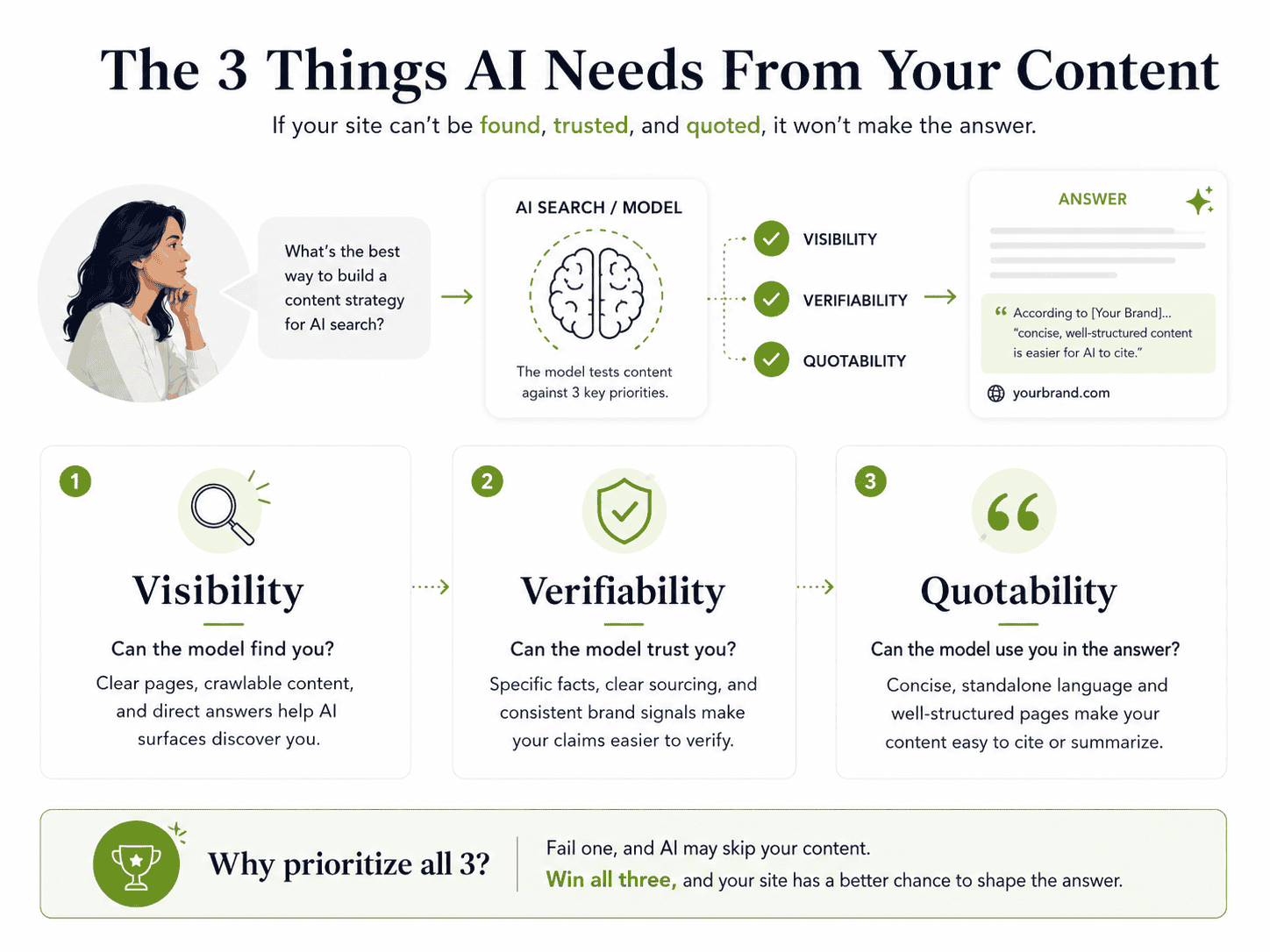
Every AI answer runs your content through three checks, in order, and failing one means the rest don’t matter. If you know my Found, Understood, Chosen framework, this is the same system pointed at a new judge: visibility is Get Found, verifiability is Get Understood, quotability is Get Chosen.
Visibility
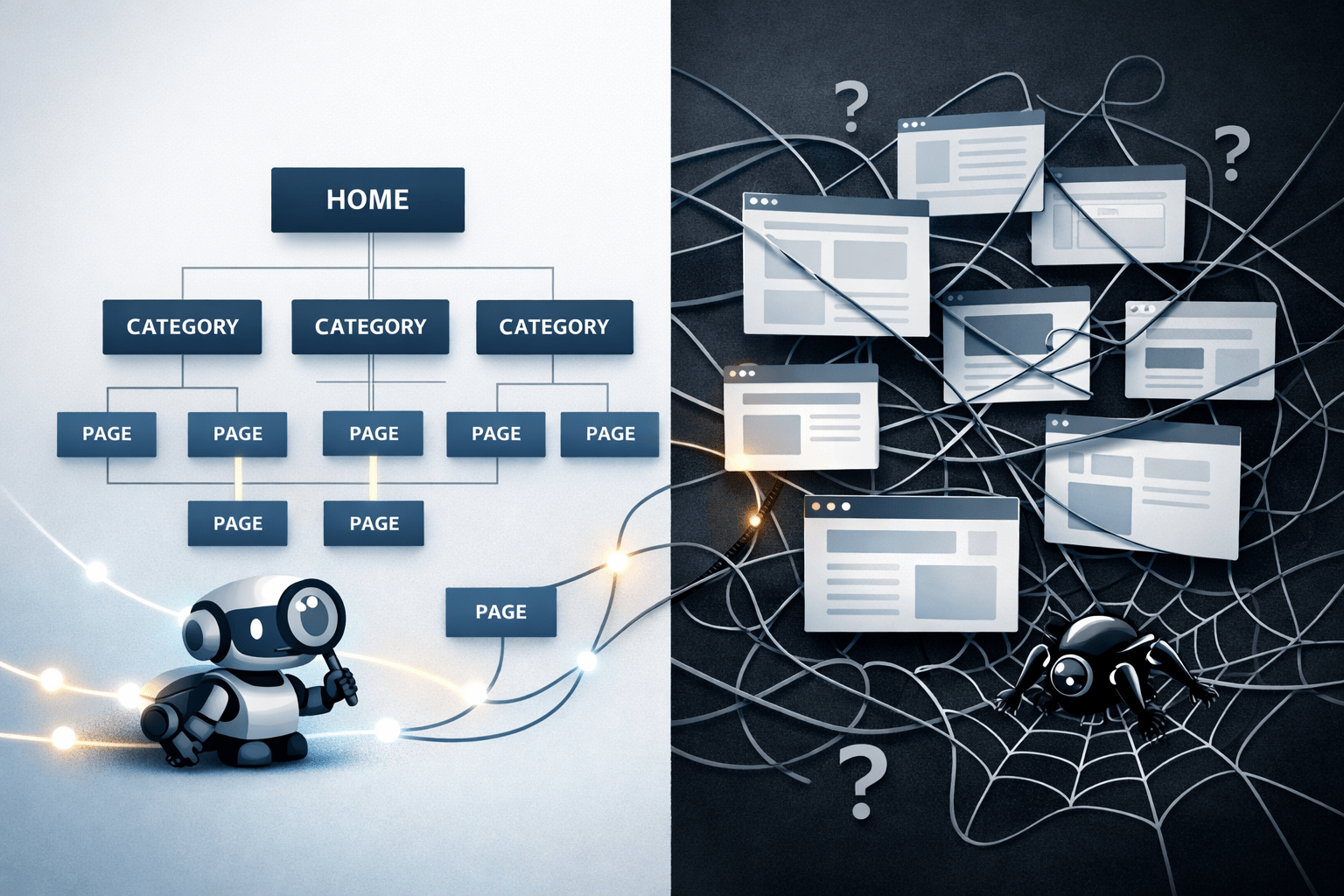
Can I even get to this?Visibility means the model can reach and retrieve your content when it goes looking, which makes it a question about retrieval rather than rankings. If robots.txt blocks AI crawlers they can’t read you, and if your words only appear after scripts load, some systems see an empty page, which is why my technical foundations work starts with what survives a raw crawl. The model also doesn’t limit itself to your site; it leans on the places it already trusts, like review platforms, forums, Reddit, and YouTube, so sometimes the fastest win isn’t on your domain at all.
Pass it when AI crawlers are allowed on purpose, your key content lives in the raw page code, and you show up on the third party sources models pull from in your category.
Every page ships as plain, static HTML, so nothing important waits on JavaScript, and robots.txt is open on purpose rather than by accident. Each meaningful deploy pings Bing through IndexNow, a fast way of telling Bing a page changed, which matters because Bing’s index feeds both Copilot and part of ChatGPT’s retrieval.
Verifiability
Can I trust this enough to repeat it?Verifiability means the model can check your claims before repeating them. Think of it as the world’s most nervous librarian: repeating something wrong is expensive, so it favors content it can trace. This is where your moat does the work, because the data only you have, assembled the way only you assembled it, is the one claim a model can verify against you and nobody else. It’s why CheckMyTap opens every city page with that city’s actual readings, and why modern search systems need consistent, checkable facts about who you are everywhere they look. The original GEO research from Princeton, Georgia Tech, and IIT Delhi found that citing credible sources inside your own content was a top tactic for AI visibility, which is worth reading twice: citing others makes you more citable.
Pass it when claims link to named sources, content carries a real byline instead of “admin,” and your site, profiles, and listings all agree on who you are.
Structured data (machine-readable labels for the series, the books, and the author) ties every fact to sources like Wikipedia and Goodreads, so the model always meets one consistent story. The build enforces honesty too: an automated check fails the deploy if a stale fact leaks into a page, and in the last content review, five proposed pages were killed because their facts couldn’t be verified against a primary source. The nervous librarian gets a site that never lies to it.
Quotability
Can I lift a clean answer out of this?Quotability means a machine can pull one of your sentences and have it still make sense on its own, because models cite passages rather than pages. The Princeton led study tested tactics across 10,000 queries and found that statistics, quotations, and cited sources lifted visibility in AI answers by as much as 40 percent, while keyword stuffing actively hurt. Your customers have already written some of your most quotable material too, because reviews are real human sentences with names attached, and pulling the best ones on-page with proper markup lets the model lift a customer’s words instead of your marketing’s. The difference is easier to see than explain:
In today’s competitive landscape, choosing the right solution can feel overwhelming, which is why it’s important to consider a variety of factors.
Only 12 percent of links cited by ChatGPT, Gemini, and Copilot rank in Google’s top 10 for the same prompt.
Pass it when every section opens with a complete, specific, standalone claim, which is the whole idea behind answer first structure. The first sentence above contains zero facts a model could repeat, while the second is already doing its job in AI answers, sourced and ready to lift.
Every book page opens like a stat sheet: narrator, page count, release date, and best seller position in one liftable passage. FAQ answers open standalone, and that FAQ page is the site’s top click earner on Google with 695 clicks in three months. The split shows up in the data too: the interactive class quiz wins the clicks (a 16.6 percent click rate, visitors averaging two-plus minutes), while the reference pages win the citations. Build both, and know which prize each one is chasing.
What the research says actually works
The GEO paper (Aggarwal et al., KDD 2024) tested content tactics across 10,000 queries, and the results split cleanly. Everything that worked makes content easier to verify and quote.
| Tactic | In practice | Result |
|---|---|---|
| Add statistics | Specific numbers over vague claims. “Removes 99 percent” beats “highly effective.” | Among the biggest gains tested |
| Cite sources | Link claims to named, credible references inside the content. | Top performer, biggest lift for lower ranked pages |
| Add quotations | Quote named experts directly, with attribution. | Strong, consistent lift |
| Keyword stuffing | Cramming the phrase in over and over. The old playbook. | Made visibility worse |
| Persuasive fluff | Confident marketing language with nothing checkable behind it. | No meaningful gain |
GEO is SEO
Time to kill the laziest myth in the industry while we’re here.
Look back at everything above and notice what it’s made of. Crawlability and rendering are technical SEO. Entities, structured data, and consistent facts are the understanding layer SEO has been building for a decade. Answer-first content matched to real intent is what good SEO content always was, and it’s the whole reason Found, Understood, Chosen maps onto this so cleanly. GEO is SEO. The fundamentals didn’t change; the judge did. So no, SEO is not dying. It has never been more essential, because the machine now reads everything before your customer reads anything, and the discipline that decides what machines find, understand, and choose is the one this industry has been practicing all along.
What did change is that it stopped being a solo sport. The models lean on Reddit threads, reviews, and YouTube, which is social and community’s turf. Retrieval depends on rendering, structured data, and index pings, which is the developers’ turf. The moat data comes from strategy and product, and the measurement loop touches analytics. The brands winning this run SEO as a cross-functional system rather than a department, because if your SEO team, your developers, and your social team don’t share a roadmap, the model meets three different versions of your brand and trusts none of them. The machines will answer either way. The question is whether they answer from verified sources or from noise, and making sure it’s the former is the job. That’s why this work matters more now, not less.
The loop I run for enterprise brands
Every enterprise program I run settles into the same four-beat loop, and it works at any size.
Listen. Run the real questions buyers ask, on a schedule, across ChatGPT, Gemini, Perplexity, and Google’s AI surfaces, and track two things separately: whether the brand is in the answer, and whether the brand’s own content is the source. A brand the model describes is at the mercy of its loudest reviewer, while a brand the model cites is telling its own story.
Mine. The dashboards aren’t report cards; they’re a content calendar wearing a scorecard costume. Every question, sub-search, and grounding query the brand hasn’t directly answered becomes a brief.
Answer. Rewrite the pages that matter so each section opens with the answer, turn the mined sub-questions into FAQ entries that actually resolve them, and publish the moat data only this brand has.
Verify. Watch mentions and citations move separately on each surface over the following weeks. When citations rise but mentions stay flat, the content is trusted and the brand framing needs work; when mentions rise without citations, the brand has fame and no receipts. The split tells you what to fix next, winners get the next round of investment, and the loop starts again.
Every green box in this post is that loop running on my own hobby site, with Bing’s grounding report as the citation scoreboard. The Quack Report runs the same playbook on Oregon football history, keeping every rivalry record and season result at its own citable address, and CheckMyTap runs it on city water data. The subjects have nothing in common, but the three tests are identical.
Your dashboards are a content strategy
Most teams read these four tools as report cards, but the better read is that each one hands you the next thing to write. It helps to know why measurement is hard in the first place: someone asks ChatGPT, gets your brand, then googles your name, and your analytics logs a branded search. The AI’s fingerprints are nowhere in the data, so you triangulate.
Peec AI
What to answer nextFeed it your buyer questions and it runs them across ChatGPT, Perplexity, Gemini, and Google’s AI surfaces on a schedule, tracking whether you appear, how you’re framed, and which sources shaped each answer, and it exposes the fan-out queries behind each one.
The move Those fan-outs and tracked questions are a ready-made FAQ outline. Answer each one directly on your site and you’re covering demand your keyword tools will never show you.
Blind spot Scheduled test prompts, not real user sessions.
Bing Webmaster Tools
What retrieval already likesMicrosoft’s AI Performance report, shipped February 2026, shows page level citations in Copilot and Bing’s AI answers, plus the grounding queries, which are the questions Copilot was trying to answer when it grabbed your page. It’s free, it’s the first official look under any engine’s hood, and it’s the source of the citation numbers in this post.
The move Treat grounding queries as briefs, and rewrite the pages Bing grabs often but answers rarely credit. Since Bing’s index is one of ChatGPT’s retrieval inputs, this doubles as an early read on what’s working in GPT.
Blind spot Microsoft’s ecosystem only. No click data yet.
Google Search Console
How people phrase it nowGoogle folds AI Overviews and AI Mode into the standard performance report, so you read it through patterns. The big tell is impressions climbing while clicks stay flat, which means you’re being shown inside answers that resolve the question before a click happens. On the fan site, one character page pulled 87,923 impressions in three months at a 0.35 percent click rate: Google answers the factual lookup right in the results, so the click gets intercepted, but the demand is real and the visibility is the asset. My approach to using GSC as a visibility dashboard matters more now, not less.
The move Mine the query report for the longer, question-shaped queries showing up against each template. Those are prompts in disguise, and they track exactly how search behavior is shifting. Give every one a direct on-page answer.
Blind spot No dedicated AI report. You’re inferring from blended data.
GA4
Which pages convert the machine’s clicksGA4 added a native AI channel in 2026, but it misses platforms (Perplexity, notably) and doesn’t backfill, so a custom channel group with a regex on session source is still the honest setup. On the fan site, the AI channel catches a few dozen sessions a month, which is real but a fraction of what the citation data proves is happening upstream. The visits you do catch run warm: Seer Interactive’s case study measured ChatGPT referrals converting at 15.9 percent against 1.76 for Google organic. That’s one client and one snapshot, and other studies find smaller multiples, but the direction is consistent: the clicks are fewer and they arrive warmer.
The move Run landing page by AI source. The pages already earning AI clicks and conversions are your template, so make the rest of the site look like them.
Blind spot Undercounts hard. Many AI visits arrive with no referrer and get logged as Direct.
Bringing it together: the build sheet
Three tests, the real assets that pass them, and the data that finds your priority one work. This is the sheet the whole post has been building toward.
| The test | What you actually build | The data that finds your P1s |
|---|---|---|
| Visibility | Open crawler access, key content in the raw page code, and presence on the review sites, forums, and channels models already trust in your category. | A crawl with scripts off, Bing’s cited-URL gaps, and Peec’s source lists showing which domains shape your category’s answers. |
| Verifiability | Moat data: the readings, pricing, and test results only you have. Plus consistent brand facts everywhere and real bylines on everything. | Peec’s framing and source reports. If the model describes you from someone else’s words, that page is the P1. |
| Quotability | Answer-first openers, real review pull quotes with attribution and markup, spec tables in plain HTML, and FAQ entries built from fan-outs. | Fan-out queries, GSC’s question-shaped queries, and Bing’s grounding queries: the exact sentences to write next. |
Bing’s grounding report showed AI answers already citing the fan site on two topics at 40-plus percent citation share each, entirely through adjacent pages, with nothing purpose-built to catch either one. Purpose-built pages for both jumped the build queue the same week, and no keyword research was involved: a surface was already pulling, and the data pointed straight at the gap.
That’s the priority rule, and it holds across every program I run, from a homebuilder to a payments company to a collectibles retailer: P1 is wherever a surface already wants you but can’t use you. That means grounding events that never become citations, mentions that never come with citations, and questions sitting in your own data that nothing on your site answers. Fix the pull before you build more push. This is the same system behind my modern search portfolio work, just written down.
The companion rule matters just as much: a winner isn’t a finish line; it’s a map for the next build. When a page starts earning citations, the data clustering around it, the fan-out phrasings, the grounding queries, the question-shaped searches, is the machine handing you the outline for the next FAQ entry, the next post, and the next topic cluster. Prioritize those neighbors and double down, because the surface has already voted, and expanding a proven winner beats guessing at a new one every time. It’s why the fan site’s release date winner sits inside a whole books cluster: reading order, recaps, a page per book, each catching another question from the same pool of demand. Gaps tell you where to start. Winners tell you where to build.
Where do you start?
In this order, because each step is cheap and each one makes the next one smarter.
- Run your own answers, manually, today. Put your 20 real buyer questions through ChatGPT, Gemini, and Perplexity and screenshot everything, which gives you a free baseline showing whether you’re mentioned, cited, both, or invisible.
- Check that the machines can reach you. Review robots.txt for AI crawler rules you didn’t know you had, and load key pages with scripts off. If the content disappears, so do you.
- Rewrite your most important pages answer first. Open every section with one standalone, specific sentence, and put a number in it wherever the truth allows one.
- Make yourself checkable. Link claims to sources, put real names on content, and make every description of your brand agree with itself.
- Then build the stack and run the loop. Use Peec for answers, Bing for citations, GSC for phrasing, and GA4 for the money end, and run the loop: listen, mine, answer, verify.
Quick answers
What is the recommendation layer in AI search?
The recommendation layer is the decision step between a person’s question and the answer an AI gives them. It’s where systems like ChatGPT, Gemini, and Google’s AI Mode retrieve sources, weigh them, and choose which brands appear in the answer. Winning it means being the source the model trusts, not just a page that ranks.
What is a fan-out query?
A fan-out query is one of the hidden sub-searches an AI runs to answer a single question. Ask AI Mode about the best water filter and it may quietly search filter types, costs, maintenance, and local water hardness, then blend the results. Tools like Peec AI expose these sub-searches, and answering them directly on your page covers demand traditional keyword tools never show.
Is GEO different from SEO?
No. GEO is SEO pointed at a new judge. The work that wins AI answers is crawlability, rendering, structured data, consistent entity facts, and answer-first content matched to intent, which is the same craft SEO has always practiced. The fundamentals didn’t change; the scoreboard did, and SEO has never been more essential because of it.
Does ranking first on Google mean AI will recommend me?
Not by itself, because it depends on the surface. Ahrefs found about 76 percent of AI Overview citations came from top 10 pages, but only 12 percent of links cited by ChatGPT, Gemini, and Copilot rank in Google’s top 10 for the same prompt. Rankings carry Google’s surfaces and Perplexity, while the chatbots barely look at them.
Is being mentioned by ChatGPT enough for my brand?
No. A mention builds awareness, but the model is describing you from memory and third party content. A citation means the model is using your content as evidence, with credit and a path back to you. Kevin Indig and Semrush found 62 percent of AI citations don’t even include a brand mention, so the two have to be earned separately.
How do I track whether AI recommends my brand?
Combine four views: a prompt tracking tool like Peec AI for what the answers say, Bing Webmaster Tools’ AI Performance report for official Copilot citation data, Search Console for impression and click patterns across Google’s AI surfaces, and GA4 with a custom AI channel for traffic and conversions. No single tool shows the whole picture yet.
Key takeaways
The decision moved. People still search, but the reading, comparing, and judging increasingly belongs to the model, and it behaves differently on every surface: AI Overviews reward rankings, AI Mode rewards covering the sub-questions, and the chatbots reward trust built across the whole web. With agentic checkout arriving through UCP and the Universal Cart, the answer is starting to double as the store shelf.
Being named is awareness and being cited is trust; a real recommendation is both at once, and the data says the two rarely travel together on their own.
Three tests decide everything: whether the model can reach you, verify you, and quote you. GEO is SEO pointed at a new judge, your dashboards hand you the roadmap when you read them as inputs instead of report cards, P1 is wherever a surface already wants you but can’t use you, and every win maps the next one. A hobby fan site with no authority earned 14,939 AI citations in 90 days this way, so the excuse shelf is empty.
The ten blue links gave everyone a shot, but the recommendation layer only has room for the sources it trusts. Be one of them.












Join the conversation!