
Most informational content fails long before conversion is even on the table. Not because it ranks poorly. Not because it is inaccurate. But it never helps the reader understand where they are in the larger process.
Informational content is often treated as the beginning of a funnel. In reality, it’s closer to orientation. People arrive unsure, not undecided. They are trying to figure out what kind of problem they have before they decide how to solve it.
When informational content ignores that role, it creates understanding without direction.
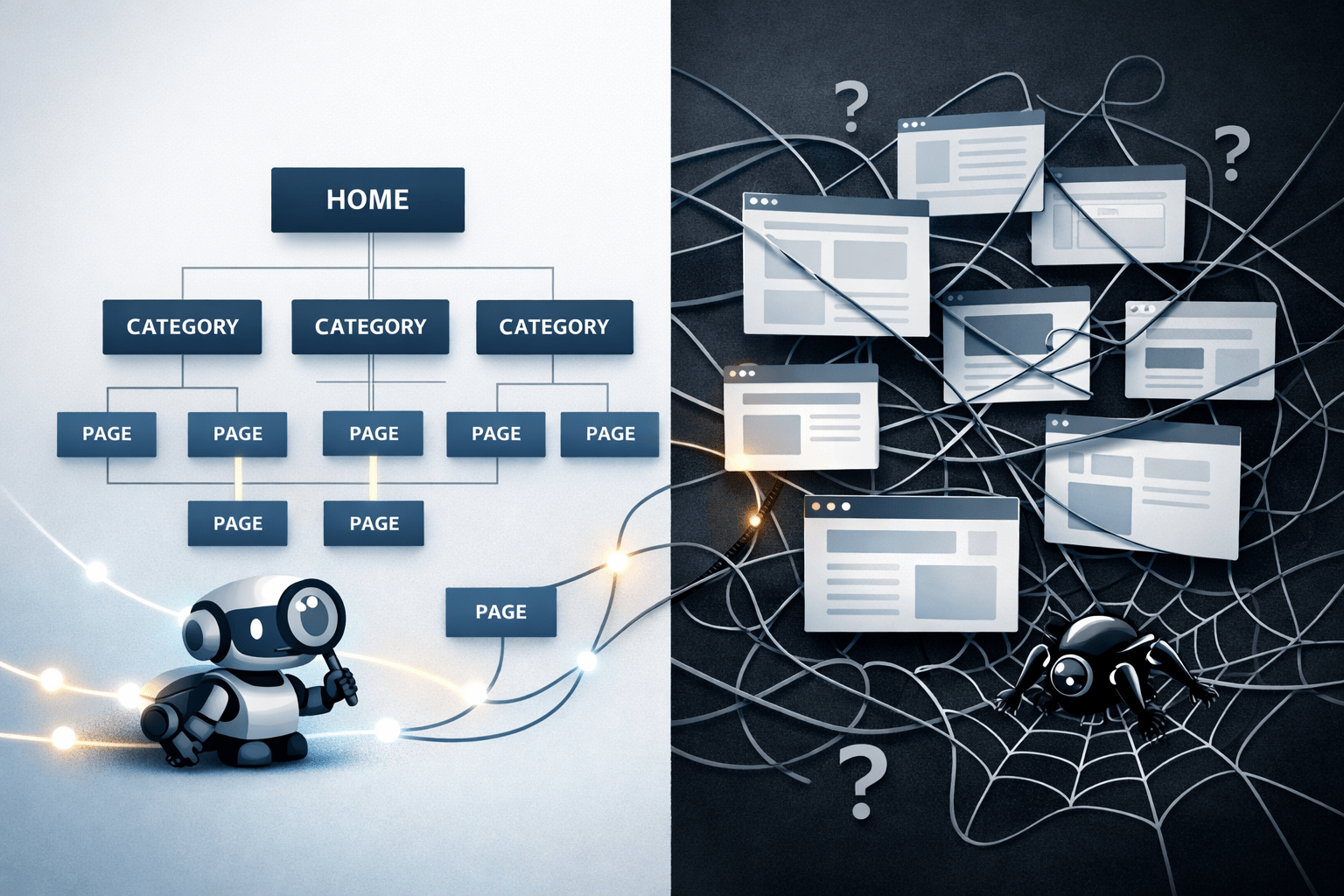
Compare the differences between informational and transactional pages side-by-side
Informational searches are not neutral curiosity. They usually come from friction.
Someone searches because:
- something feels unclear
- a situation changed
- a decision is approaching, but not yet formed
Queries like:
- “what does informational content actually do”
- “how does google understand website content”
- “what causes rankings to fluctuate”
These are not requests for encyclopedic knowledge. They are attempts to reduce uncertainty.
The mistake is treating informational intent as a request for completeness, instead of a request for clarity, which is a key pillar in my SEO system.
Quick Recap of Search Intent Terminology Before We Continue
Informational, commercial, navigational, and transactional search intent reflects different stages of how people move toward a decision. Informational searches are about orientation and understanding, where someone is trying to make sense of a topic or situation. Commercial investigation searches sit in the middle, where users compare options, evaluate tradeoffs, and reduce risk. Navigational searches signal familiarity and trust, with users trying to reach a specific brand or destination. Transactional searches happen last, when someone is ready to act but still needs confirmation. Problems arise when content treats these intents as interchangeable, rather than designing pages to support the specific questions and expectations that exist at each stage.
4 Types of Search Intent
Every search falls into one category. Match your page to user intent or lose the click.
Why Informational Content Looks Successful but Quietly Fails
Informational content is rewarded early.
Yes, it earns impressions. Yes, it earns clicks. Yes, it earns rankings. That feedback loop convinces teams that the content is working, even when it isn’t doing anything downstream.
What looks like success at the surface often masks a deeper issue: the content explains what something is, but not why it matters now or what it connects to next.
Understanding increases. Confidence does not.
One important clarification, though, as I don’t want this point to get lost:
Clear, calculated Informational content is still absolutely essential.
It is how people discover problems, learn vocabulary, and orient themselves before any decision is possible. Without informational content, users never reach the evaluation or action stages at all. The issue is not creating informational pages. The issue is treating them as finished work instead of the foundation of a larger journey. When informational content is designed to support progression rather than stand alone, it becomes one of the most valuable parts of an SEO system.
However, poor informational content structure can lose influence and hurt visibility.
Where Poorly Done Informational Content Loses Its Influence
It Treats the Topic as the Goal
Most informational pages are written as if the topic itself is the destination. Once explained, the job is considered done.
But readers don’t arrive at mastering a topic. They arrive to situate themselves.
When content ends at explanation, it leaves the reader informed but unanchored.
It Avoids Making Tradeoffs Visible
Informational content often tries to be neutral. It lists options, definitions, or factors without helping the reader understand which ones matter in different situations.
Neutrality feels safe, but it removes usefulness. Readers don’t need more facts. They need help narrowing their thinking.
A More Realistic Example of Informational Failure
Consider a post titled:
How Google Understands Website Content
The article explains crawling, indexing, and relevance clearly. It ranks. It gets traffic.
But it never addresses:
- When this understanding breaks down
- What site owners should worry about first
- How this affects real-world decisions
The reader understands more, but still doesn’t know what to pay attention to.
So they search again. Fish off the hook, I repeat, FISH OFF THE HOOKKKKK.
Why This Creates Long-Term SEO Blind Spots
When informational content doesn’t guide orientation:
Users don’t explore deeper pages
Internal links don’t get used
Related topics remain disconnected
Over time, the site accumulates knowledge without cohesion. Search systems see content, but not a clear progression. Authority stalls, even as volume grows.
What Informational Content Needs to Do Differently
Help the Reader Locate Themselves
Good informational content quietly answers:
- what kind of problem this is
- how urgent it is
- what typically comes next
This doesn’t require selling or pushing. It requires framing.
Make the Next Question Obvious
The strongest informational pages don’t force a next step. They make it feel natural.
By the end of the page, the reader should know:
- what they still don’t know
- which direction to explore
- what kind of decision they are moving toward
That is momentum.
How to Tell If Informational Content Is Actually Working
Traffic is a weak signal.
Better signals include:
- whether readers click into adjacent topics
- whether the same users return later
- whether informational pages assist deeper engagement
If informational content never participates in a longer journey, it’s isolated knowledge.
On that note, I hope you continue reading about search behavior and intent 😉
Common Informational Content Traps
- Treating explanation as impact
- Writing for completeness instead of usefulness
- Ending pages without orientation
- Measuring success only at the page level
Interested in the psychology behind how people search? This page explores how search behavior and user intent shape what people look for, how they phrase queries, and how modern search systems interpret those patterns.
Conclusion
Informational content is not the problem.
The problem is mistaking understanding for progress.
Informational content should not close the conversation. It should open the right one.
When informational pages help readers orient themselves and see what comes next, they become the foundation of decision-making. When they don’t, they become dead ends that look productive but go nowhere.
👍0❤️0👏0🎉0🙏1😢0
Frequently Asked Questions About Informational Search Intent
What is informational search intent
Informational search intent describes queries where someone is trying to understand a topic, situation, or problem. The goal is clarity and orientation, not immediate action or purchase.
How is informational search intent different from transactional search intent
Informational search intent is about orientation and understanding, while transactional search intent is about confirmation and action. Informational content helps users figure out what kind of problem they have and what concepts matter, whereas transactional content helps users decide whether they are ready to act and with whom. Informational content builds context and confidence early, while transactional content resolves remaining doubt at the end. Problems arise when informational pages are expected to convert, or when transactional pages assume understanding that was never built upstream.
How is informational search intent different from commercial search intent
Informational search intent is about orientation, while commercial search intent is about evaluation. When someone searches informationally, they are trying to understand a topic, define a problem, or build enough context to know what matters. Commercial search intent comes later, when the user already understands the problem and is actively comparing options, weighing tradeoffs, and reducing risk. Informational content answers “what is this and why does it matter,” while commercial content answers “which option fits my situation best.” Confusion happens when informational pages try to persuade too early, or when commercial pages assume understanding that was never established.
How is informational search intent different from navigational search intent
Informational search intent is about understanding, while navigational search intent is about access. When someone searches informationally, they are trying to learn, orient themselves, or reduce uncertainty about a topic or situation. Navigational search intent appears when the user already knows where they want to go and is using search as a shortcut to reach a specific brand, site, or page. Informational content helps users make sense of a problem, while navigational content confirms familiarity and trust. Confusion happens when informational pages assume brand awareness, or when navigational pages try to educate instead of getting users where they expect to land quickly.
Why does informational content get traffic but not results
Because traffic reflects relevance, not usefulness. Informational content often ranks by answering a question, but fails when it does not help the reader understand what matters next or how the information connects to a decision.
Is informational content still important for SEO
Yes. Informational content is foundational. It introduces topics, builds topical authority, and captures early signals of interest. The problem is not creating it. The problem is stopping there.
How can I tell if my informational content is a dead end
Common signs include high impressions with low internal clicks, users leaving the site after one page, or informational pages that never assist conversions or deeper engagement.
Should informational content include calls to action
It should include contextual direction, not aggressive sales CTAs. Informational pages work best when they point to comparisons, deeper explanations, or applied examples that match the reader’s next question.
How does informational intent connect to other intent types
Informational intent often precedes commercial investigation and transactional intent. If the transition between these stages is unclear, users leave to find content elsewhere that helps them progress.
Does AI-driven search change how informational content works
Yes. AI summaries and new SERP layouts often surface informational content directly. Pages that lack clarity, structure, or contextual framing are harder for systems to interpret and reuse.
What should I measure to evaluate informational content performance
Look beyond pageviews. Pay attention to internal navigation, repeat visits, assisted conversions, and whether informational pages contribute to longer user journeys over time.
Can informational content hurt SEO if done poorly
Indirectly. While it may rank initially, content that consistently fails to engage or guide users can weaken overall site cohesion and stall authority growth.
What makes good informational content actually useful
Good informational content helps readers orient themselves. It clarifies what kind of problem they are dealing with, what typically comes next, and where to focus attention as they move forward.
Thank you for reading. See related posts below. 📖













Join the conversation!