Case study · One of my own sites · A miss
CheckMyTap: 1.6K pages in Google, then 218
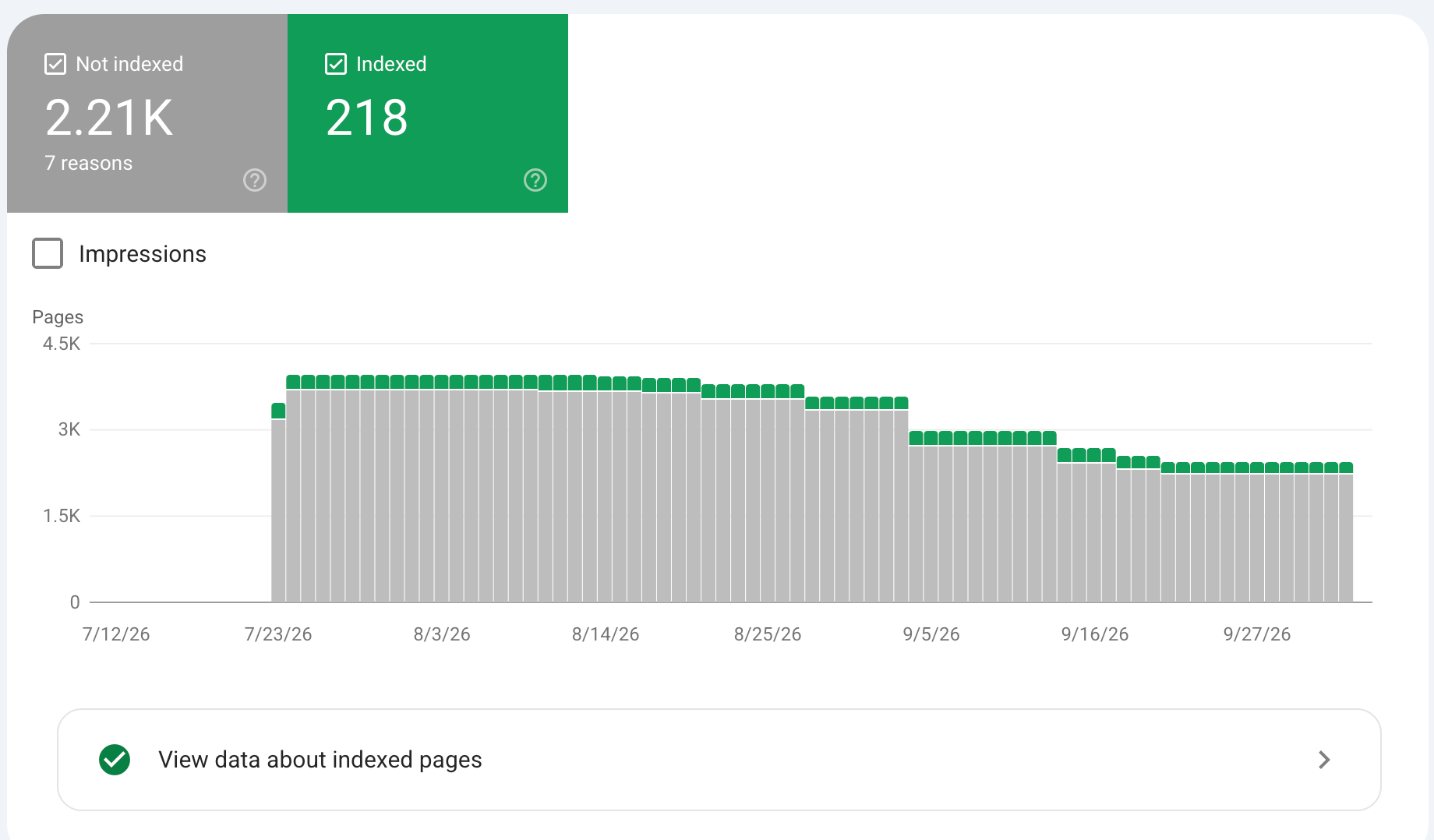
Google marked 1.6K pages indexed on April 26. By October 3, it marked 218. I can measure the decline; these numbers alone cannot explain it.
- 1.6Kpages marked Indexed in Google on April 26, 2026
- 218pages marked Indexed on October 3, down 86.2%
- 0Google clicks from 204 impressions, 2026-09-11 to 2026-10-08
The whole site, month by month
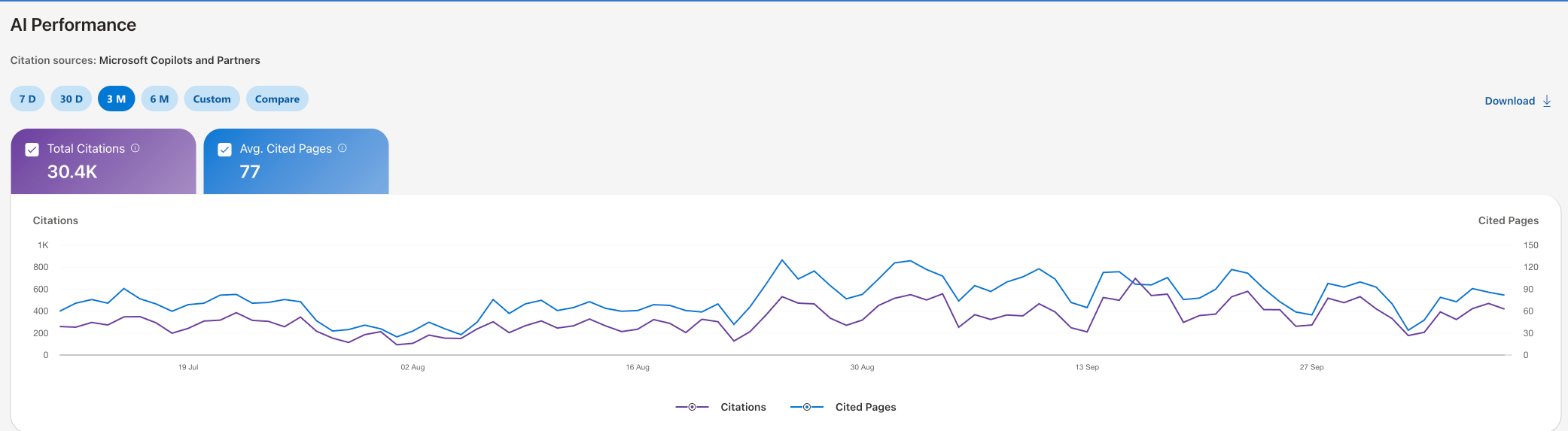
The last 28 days for CheckMyTap: fell on Bing.
- September vs August-34%147 search clicks, from 223
- Last 28 days vs the 28 before-29%121 search clicks, from 171
- Jul to Sep vs Apr to Jun-8%621 search clicks, from 676
- 189Apr
- 269May
- 218Jun
- 251Jul
- 223Aug
- 147Sep
A local question, repeated at scale
I built CheckMyTap so someone could look up their city's water information, understand what the data could tell them, and choose what to check next.
The more useful test was whether the pages kept showing up for people and whether their claims stayed correct as the catalog grew.
Why local questions deserve their own pages in the first place: why local SEO is underrated.
A large catalog of local pages, guides and tools
I was the site's builder and editor. It grew into a large catalog of local pages, guides and tools, and early indexing made that scale feel promising.
The evidence on this page comes from Google Search Console exports.
Google kept fewer of the pages
- 2026-04-26, pages marked Indexed
- 1.6K
- 2026-10-03, pages marked Indexed
- 218
Google Search Console Page indexing exports, two dated snapshots. The reported count dropped 86.2%; it does not identify the cause.
Over the 28 days from 2026-09-11 to 2026-10-08, the site showed up in Google results 204 times and got 0 Google clicks. That is one search engine over one month, not a count of every reader.
I know the result. I do not know one cause.
The loss of indexed pages and clicks is real in these exports. A sitemap or a valid page is no promise that Google will keep it in search. The data here cannot separate demand, content quality, duplication, technical issues or search-system changes into a single explanation.
That distinction changed how I talk about progress: publishing and initial indexing are milestones. Sustained use and trustworthy information are the harder tests.
How I measured it. The two index counts are read off Google Search Console's Page indexing report on two different dates, so they are snapshots, not a trend line. The clicks and impressions are the site's daily totals added up for the 28 days. Neither one says why the pages dropped out. The month-by-month report above covers Google and Bing clicks for the whole site.
A catalog needs a check that can stop it
While maintaining the site, I found that repeated reviews were not enough to keep every claim safe. After a content-integrity sweep, I added a build check for defined errors, and the build stops when it finds one. A stricter version, which also stops the build when the check itself fails to load or crashes, is written but not shipped yet. Until it ships, a broken check can still let a build through.
Input
Generated pages
Check
A list of known wrong claims and content errors
Failure
Build stops
That mechanism reduces one class of publishing mistakes. It does not verify every possible statement, explain the search decline or prove a recovery.
The lesson I carry forward: a quality rule only counts once it can fail the build, and the rule itself needs checking too.
I now use checks across my sites for errors like this. I also show what those checks still miss.
The evidence
Receipt · CheckMyTap
Receipt · CheckMyTap